Consulta de Produto
Seu endereço de e-mail não será publicado. Campos obrigatórios estão marcados *

 Inglês


Luvas de nitrilo coloridas: o que cada cor significa e como escolher o par certo
Oct 12,2026
As luvas de vinil são seguras? Força da barreira, riscos do uso de alimentos e quando escolher o contrário
Oct 05,2026
Resistência química das luvas de nitrilo: um guia prático com gráfico, avaliação e perguntas frequentes
Sep 28,2026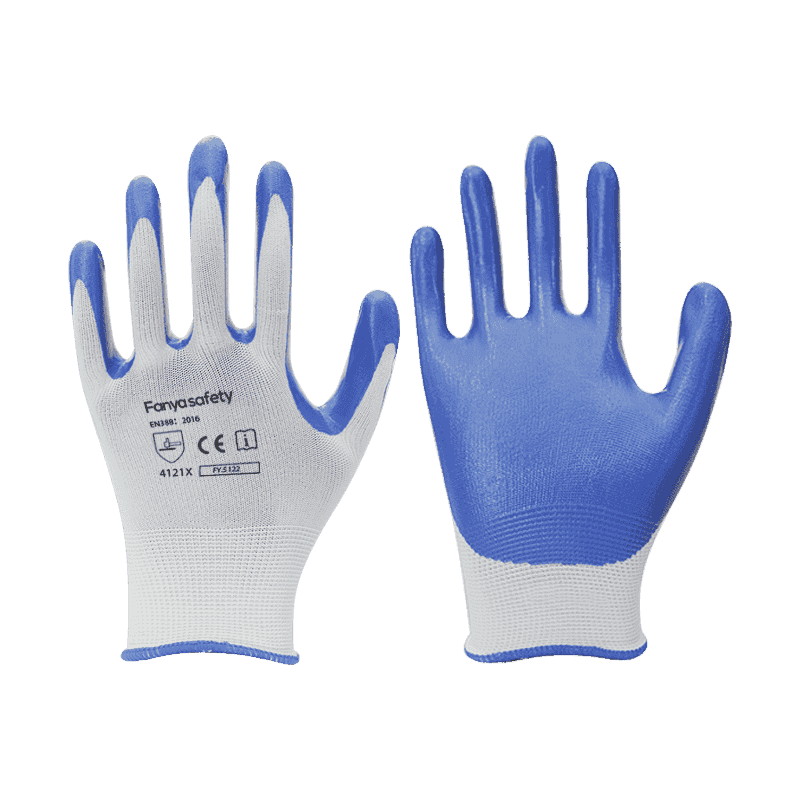
Se sua equipe manuseia peças oleosas, carrega caixas ou trabalha próximo a equipamentos em movimento, luvas de nitrilo laranja são uma das opções de proteção para as mãos mais práticas que você pode solicitar . A cor brilhante torna as mãos visíveis à distância, enquanto o revestimento de nitrilo resiste muito melhor a óleo, gordura e abrasão do que algodão simples ou látex na maioria dos trabalhos industriais. Esta não é uma preferência de estilo; é uma decisão de visibilidade e durabilidade que afeta a segurança diária no piso.
Este guia explica como as luvas de nitrila laranja são construídas, por que a cor laranja é importante, como os tipos de revestimento alteram o desempenho, quais materiais de revestimento e medidores atendem a diferentes tarefas e o que verificar antes de fazer um pedido em massa. Se você estiver contratando um armazém, uma equipe de construção, uma linha de montagem ou uma equipe de manutenção, as seções abaixo fornecem um caminho claro desde a especificação até a compra.
Uma luva nitrílica laranja é um forro tricotado coberto com um revestimento de borracha nitrílica. O forro determina conforto, ajuste, respirabilidade e, em alguns casos, proteção contra cortes; o revestimento determina aderência, resistência ao óleo e vida útil. A nitrila, também chamada de borracha nitrílica butadieno (NBR), é uma borracha sintética que não provoca alergias ao látex e resiste a óleos e solventes por muito mais tempo do que o látex de borracha natural na maioria das condições de trabalho.
A cor laranja vem do pigmento adicionado ao banho de nitrila ou ao fio do liner. Durante a produção, o forro é colocado em um molde em formato de mão, mergulhado em nitrila líquida e depois curado em forno para unir o revestimento ao tecido. O revestimento pode cobrir toda a luva ou parar ao redor da área dos nós dos dedos, um estilo conhecido como imersão de três quartos que melhora o fluxo de ar nas costas da mão.
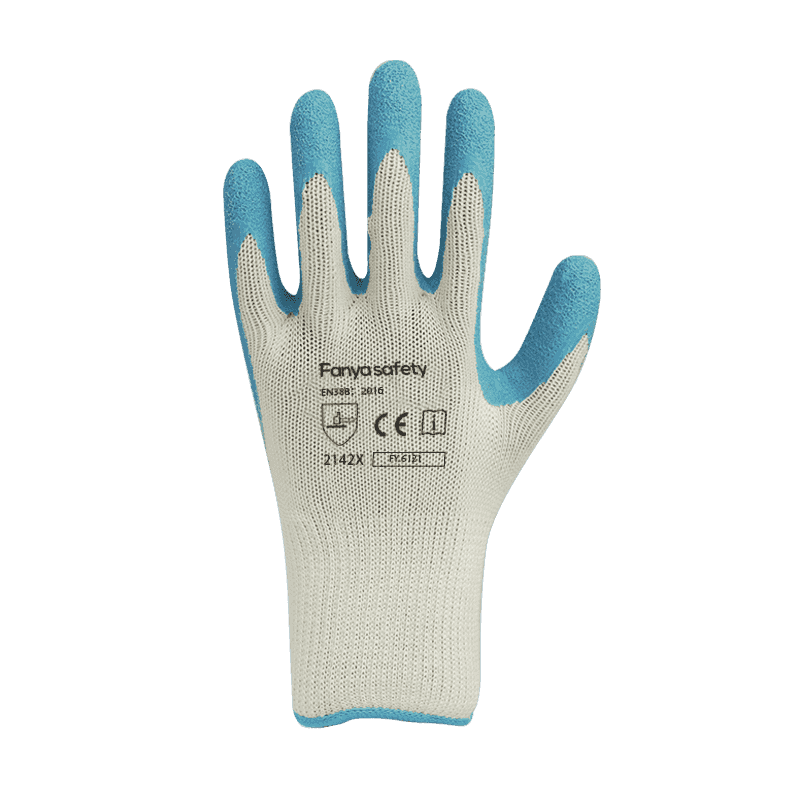
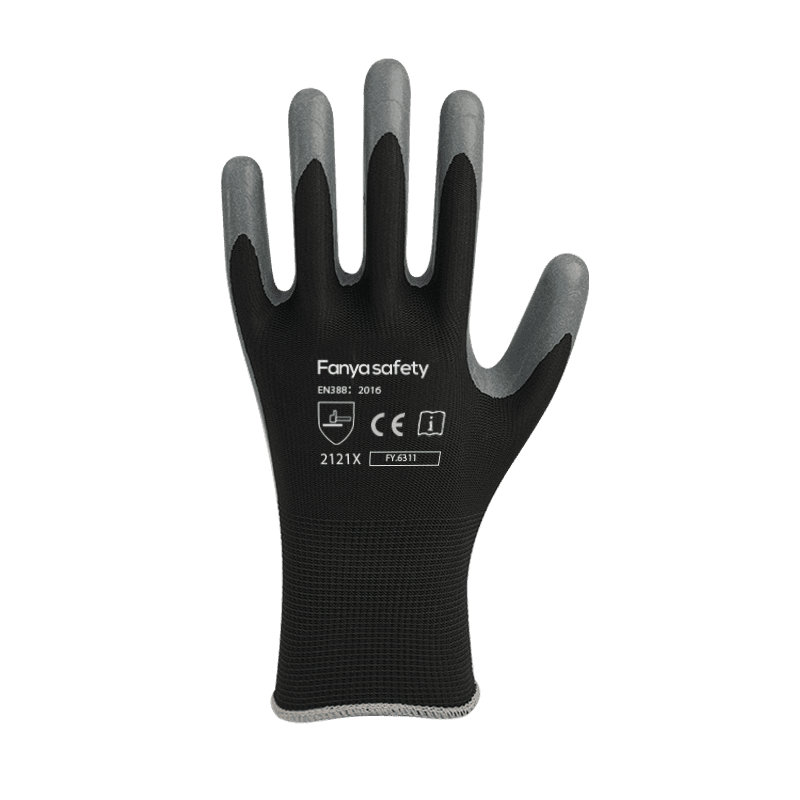
Um exemplo leve é o Forro de náilon 13G com revestimento de nitrila , que combina uma concha de náilon fina e ajustada com um acabamento de nitrila durável para o trabalho diário de manuseio. A mesma construção pode ser produzida em laranja para equipes que necessitam de luvas visíveis, resistentes a óleo e sem volume extra.
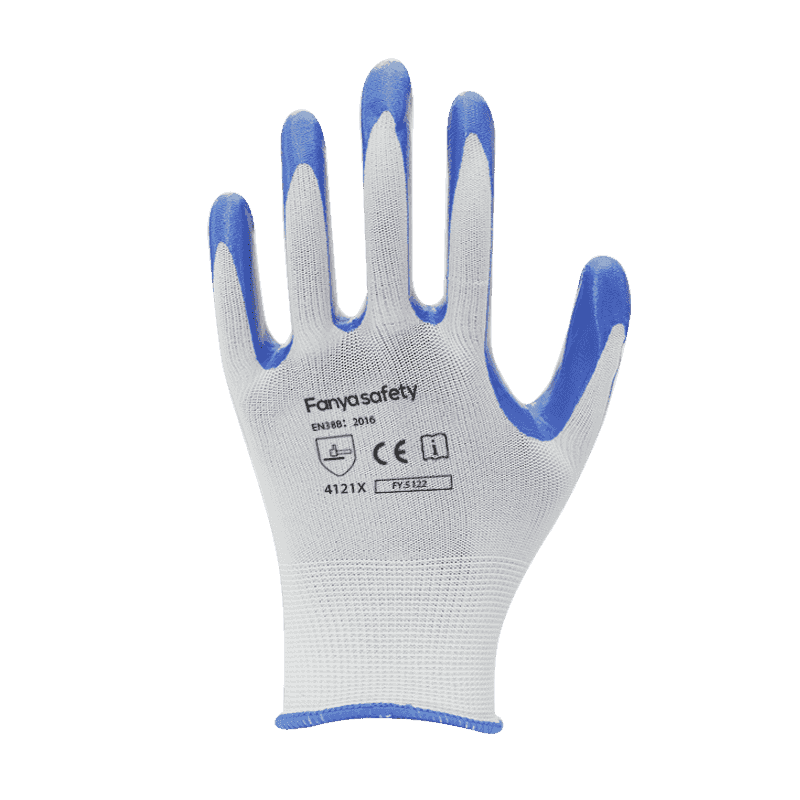 Forro de náilon 13G personalizado com revestimento de nitrila Fornecedores, Empresa - Jiangsu Fanya L Jiangsu Fanya Labor Protective Products Co., Ltd é um forro de náilon 13G personalizado na China com fornecedores e empresa de revestimento de nitrila.Art.No.:FY.5122 Ver Produto →
 O laranja fica em uma faixa de comprimento de onda que o olho humano detecta rapidamente à luz do dia, luz artificial e sombra parcial. É a mesma razão pela qual o laranja é usado em cones de trânsito, coletes de segurança e marcadores de alerta. Quando um trabalhador usa luva laranja, o movimento da mão fica mais fácil de perceber pelo canto do olho, o que é importante em ambientes onde uma mão entrando na zona errada pode causar um acidente.
Considere algumas situações reais:
O benefício da visibilidade é especialmente forte na logística e na construção, onde os trabalhadores se deslocam entre a iluminação interior e exterior. As luvas laranja mantêm o valor do sinal em ambas as configurações, tornando-as um padrão sensato para operações de alto tráfego.
Nem todos os revestimentos nitrílicos se comportam da mesma forma. A estrutura da superfície do revestimento controla a aderência, respirabilidade e durabilidade em diferentes materiais. Escolher o tipo de superfície errado é o erro mais comum que os compradores cometem, porque uma luva que funciona bem em papelão seco pode parecer escorregadia em peças metálicas oleosas.
| Tipo de revestimento | Sensação de superfície | Melhor desempenho | Limitação Principal |
|---|---|---|---|
| Nitrila lisa | Fino e uniforme | Manuseio preciso, peças secas, bom feedback tátil | Pode parecer escorregadio em superfícies oleosas ou molhadas |
| Espuma nitrílica | Microbolhas no revestimento | Películas leves de óleo, aderência em piso molhado, respiráveis | Menor resistência à abrasão sob forte impacto |
| Nitrilo arenoso | Áspero, texturizado | Aderência a seco em caixas, vergalhões e superfícies ásperas | Menos precisão tátil para trabalhos muito finos |
| Nitrilo arenoso duplo | Camadas texturizadas espessas | Manuseio pesado, vida útil prolongada | Um pouco mais rígido e menos respirável |
A espuma nitrílica é a favorita para trabalhos de montagem oleosos porque as bolhas de ar criam canais que permitem que uma fina película de óleo passe sob a luva em vez de se acumular na superfície. Para ver mais de perto como as versões de espuma se comportam, leia isto explicação sobre luvas de espuma e como elas melhoram a aderência .
O forro é a base do tecido que fica contra a pele. Duas especificações o definem: o material da fibra e a bitola, que se refere à densidade do tricô medida em agulhas por polegada. Juntos, eles determinam o ajuste, a respirabilidade, a destreza e quanto tempo a luva dura antes que o forro se desgaste.
| Material do forro | Propriedades principais | Melhor ajuste |
|---|---|---|
| Náilon | Elástico, justo e de secagem rápida | Manuseio geral, montagem, tarefas que exigem destreza |
| Poliéster | Macio, confortável, mantém bem a cor | Uso o dia todo, serviço leve a médio |
| Fibra de bambu | Gerenciamento de umidade natural e respirável | Ambientes quentes, trabalhadores que suam muito |
| Fibra HPPE | Sintético de alta resistência, resistência ao corte | Peças afiadas, manuseio de metal, vidro, fabricação |
O medidor é igualmente importante. Um número menor significa uma malha mais grossa e grossa; um número mais alto significa uma malha mais fina e justa. Aqui está como os medidores comuns se comparam:
| Medidor | Sensação do forro | Uso típico |
|---|---|---|
| 10G | Malha grossa e mais pesada | Manuseio pesado, materiais grosseiros |
| 13G | Peso médio, equilibrado | Escolha multifacetada mais comum |
| 15G | Ajuste mais fino e mais próximo | Manuseio de peças, melhor flexibilidade |
| 18G | Muito fino, alta destreza | Montagem de precisão, trabalho com pequenos componentes |
| 21G | Ultrafino, fino | Inspeção, peças eletrônicas, manuseio delicado |
Para a maioria das luvas de nitrilo laranja de uso geral, 13G é o padrão porque equilibra durabilidade com destreza suficiente para trabalhos típicos de armazenamento e manutenção. Se sua equipe monta peças pequenas, mude para 15G ou 18G. Se os trabalhadores manusearem madeira áspera ou peças de metal pesado, um revestimento 10G ou 13G durará mais.
A luva de nitrilo laranja certa depende do que os trabalhadores realmente tocam. Siga estas cinco etapas para restringir as opções:
Uma regra prática: se os trabalhadores reclamarem de punhos oleosos e escorregadios, mude de nitrilo liso para espuma de nitrilo. Se eles reclamarem de desgaste precoce nas pontas dos dedos, mude para nitrila arenosa ou um revestimento de calibre mais pesado. Estas duas alterações resolvem a maioria dos problemas de desempenho das luvas sem aumentar drasticamente os custos.
As luvas de nitrilo laranja aparecem em muitas indústrias porque a combinação de alta visibilidade e resistência ao óleo se adapta bem a diferentes locais de trabalho. Aqui estão as aplicações mais comuns:
Se você é novo na seleção de luvas industriais, comece com nosso visão geral das luvas de trabalho e como elas são categorizadas , que explica as diferenças entre estilos revestidos e não revestidos em linguagem simples.
Nem todas as luvas de nitrilo laranja são iguais. Duas luvas com o mesmo calibre e nome de revestimento podem ter um desempenho muito diferente dependendo do cuidado com que foram fabricadas. Aqui estão os pontos de qualidade a serem verificados em uma amostra antes de fazer um pedido em grandes quantidades.
Passe o dedo ao longo da área revestida. A camada deve ser uniforme, sem manchas finas ou áreas expostas perto das pontas dos dedos, porque as pontas dos dedos são as que sofrem maior desgaste. Uma imersão de três quartos deve terminar em uma linha limpa e consistente nas costas da mão, e não em uma borda irregular.
Vire a luva do avesso e verifique se há fios soltos, pontos saltados ou costuras ásperas que possam irritar os dedos. Um bom forro de malha sem costura não deve ter pontos de pressão quando você fecha o punho. O punho deve esticar e voltar ao formato sem deixar vincos permanentes.
A tonalidade laranja deve ser uniforme em toda a superfície revestida e combinada entre as luvas esquerda e direita. Variação significativa de cor entre lotes pode ser um sinal de imersão ou cura inconsistente. Se sua equipe usa codificação por cores para tarefas diferentes, isso é ainda mais importante.
O pulso tricotado deve segurar a luva no lugar sem interromper a circulação. Puxe o manguito suavemente; deve esticar e recuperar totalmente. Um punho fraco faz com que as luvas escorreguem durante o trabalho e entrem sujeira.
Inspecione a superfície revestida em busca de furos, bolhas ou pontos pegajosos. Um revestimento de nitrila devidamente curado tem um acabamento limpo e seco e apenas um leve cheiro de borracha. Um forte odor químico pode indicar uma cura incompleta, o que pode reduzir a vida útil da luva.
Comprar luvas de nitrila laranja de um fabricante, em vez de um intermediário comercial, altera o que você pode especificar. Um fabricante controla toda a cadeia de produção, para que você possa solicitar um tom laranja específico, ajustar a espessura do revestimento, escolher o estilo do punho e até combinar seu revestimento padrão com um revestimento diferente para tarefas específicas.
O fabricante por trás deste guia, Jiangsu Fanya Labor Protective Products Co., Ltd., opera 17 linhas de produção automatizadas com oficinas de tecelagem, revestimento e costura em uma única instalação e relata uma capacidade anual de 5 milhões de dúzias de pares, de acordo com o perfil de sua empresa. Essa escala significa que pedidos em grandes quantidades podem ser produzidos sob o mesmo teto, desde a fibra até a luva acabada, o que mantém o controle de qualidade consistente em todos os lotes.
Antes de enviar uma consulta, é útil entender como as luvas revestidas de nitrilo são construídas na fábrica. Nosso guia para luvas revestidas de nitrilo percorre o processo de revestimento e a diferença entre estilos de imersão, o que lhe dá o vocabulário para comunicar claramente suas necessidades.
Para um conforto suave durante todo o dia em trabalhos de manuseio a seco, o Luvas de nitrilo com forro de poliéster 13G são um modelo básico popular que pode ser produzido em laranja de alta visibilidade. Os forros de poliéster retêm bem a tinta, de modo que o tom laranja permanece consistente lavagem após lavagem.
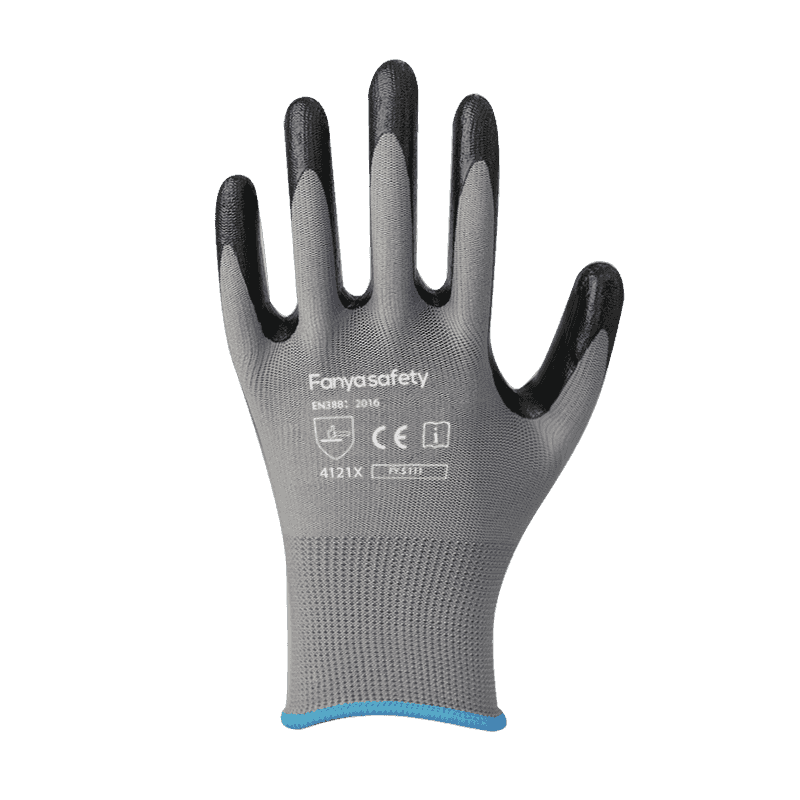 Forro de poliéster 13G personalizado com revestimento nitrílico Fornecedores, Empresa - Jiangsu Fan Jiangsu Fanya Labor Protective Products Co., Ltd é um forro de poliéster 13G personalizado na China com fornecedores e empresa de revestimento nitrílico.Art.No.:... Ver Produto →
 As luvas de nitrilo laranja são reutilizáveis e a forma como são limpas e armazenadas afeta diretamente sua durabilidade. O revestimento de nitrilo pode sobreviver a muitas mudanças se o revestimento não for abusado.
Após uso intenso, enxágue as luvas em água fria com detergente neutro e seque-as ao ar livre, longe da luz solar direta e de fontes de calor. Não os lave na máquina com produtos químicos industriais agressivos e nunca os deixe dobrados sob ferramentas pesadas, pois os vincos enfraquecem a ligação do revestimento. Guarde-os na horizontal ou pendurados em um local fresco e seco, com baixa exposição aos raios UV.
Substitua as luvas ao observar algum destes sinais:
Sim. O nitrilo é uma borracha sintética que resiste muito melhor ao óleo, graxa e muitos fluidos à base de petróleo do que o látex ou o algodão. Para trabalhos que envolvam peças oleosas, escolha um revestimento de espuma nitrílica, que mantém uma aderência segura quando películas de óleo se acumulam na superfície.
A espuma nitrílica tem uma superfície porosa e cheia de bolhas que absorve óleo leve e permanece aderente em superfícies molhadas ou oleosas. O nitrilo arenoso tem uma superfície áspera e texturizada que se destaca em materiais secos e abrasivos, como papelão, vergalhões e madeira áspera. A espuma é adequada para exposição ao óleo; areia é adequada para manuseio pesado e seco.
A proteção contra cortes vem do revestimento, não do revestimento. Um forro padrão de náilon ou poliéster oferece resistência limitada a cortes. Se o seu trabalho envolve metal afiado, vidro ou lâminas, escolha uma luva com forro de fibra HPPE sob o revestimento de nitrila. HPPE é uma fibra sintética de alta resistência usada especificamente para luvas de trabalho resistentes a cortes.
O G significa calibre, que é a densidade de tricô do forro, medida em agulhas por polegada. O forro 13G é uma malha de peso médio que equilibra durabilidade e destreza, tornando-a a escolha mais comum para luvas de trabalho de uso geral. Números mais altos, como 15G e 18G, são mais precisos e flexíveis; números mais baixos, como 10G, são mais grossos e resistentes.
Sim. Ao contrário das luvas de exame descartáveis, as luvas de trabalho revestidas são projetadas para serviços reutilizáveis. Eles podem ser enxaguados, secos ao ar e usados em vários turnos, desde que o revestimento e o forro permaneçam intactos. Substitua-os quando o revestimento descascar, o revestimento rasgar ou a aderência se degradar visivelmente.
A personalização depende do fabricante. Como a Jiangsu Fanya opera suas próprias linhas de tricô e revestimento, ela pode ajustar a cor do fio do forro, a tonalidade do revestimento e adicionar recursos como um punho colorido ou um comprimento de imersão específico. Discuta seus requisitos diretamente com a fábrica para confirmar as quantidades mínimas de pedido e o prazo de entrega.
As luvas de nitrilo laranja ganham o seu lugar em qualquer operação onde a visibilidade e a resistência ao óleo são importantes. A cor melhora a comunicação de segurança no piso e o revestimento nitrílico protege as mãos contra óleos, graxas e abrasões que dominam o trabalho industrial. O segredo é combinar a construção da luva com a tarefa específica: espuma de nitrila para trabalhos oleosos, nitrila arenosa para manuseio a seco, calibres mais finos para precisão e revestimentos de HPPE onde há risco de corte.
Comece com um pequeno pedido de amostra, teste as luvas com os trabalhadores que as usarão diariamente e meça o desempenho pelo desgaste do revestimento, queixas de aderência e lesões nas mãos. Esse ciclo de feedback lhe dirá mais do que qualquer folha de especificações. Para trabalhos pesados, secos e abrasivos onde o desgaste da aderência é o principal problema, o luvas de revestimento duplo de nitrilo arenoso com forro de poliéster proporcionam uma superfície texturizada mais espessa que prolonga a vida útil em condições exigentes.
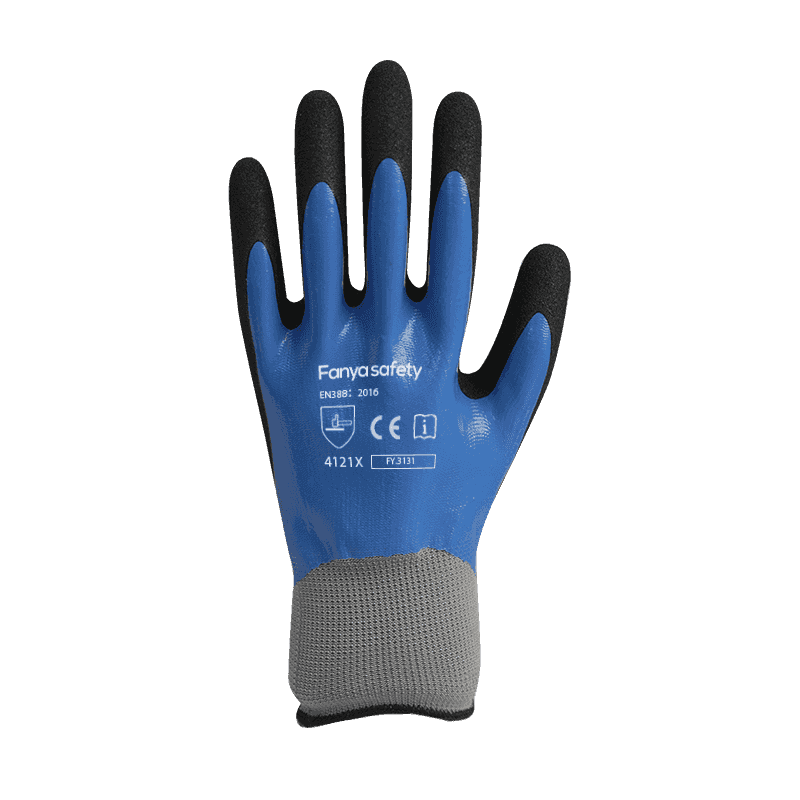 Forro de poliéster 13G personalizado com revestimento duplo de nitrilo arenoso Fornecedores, Empresa Jiangsu Fanya Labor Protective Products Co., Ltd é um forro de poliéster 13G personalizado na China com fornecedores de revestimento duplo de nitrila arenosa e ... Ver Produto →
 Uma luva de nitrilo laranja bem escolhida é um pequeno investimento que compensa em menos lesões nas mãos, menos desperdício de produto devido à queda de itens e menor frequência de substituição de luvas. Defina as condições de trabalho, combine o revestimento e o liner e verifique a qualidade em uma amostra antes de aumentar a escala.
Luvas de nitrilo vs látex: comparação completa com prós, contras e guia de compra
Como escolher luvas de cozinha: opções de látex, nitrilo, PU e resistentes a cortes para cada tarefa
Seu endereço de e-mail não será publicado. Campos obrigatórios estão marcados *
Você pode entrar em contato comigo usando este formulário.